





The New Nanzan Guide to Japanese Religions
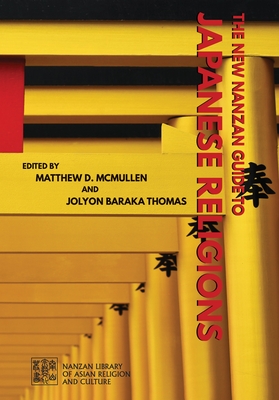
The New Nanzan Guide to Japanese Religions
For nearly two decades, the Nanzan Guide to Japanese Religions has served as a valuable resource for students and scholars of religion in Japan. This exciting update expands the audience to include non-specialists of Japan while also complicating the notions of "Japan" and "religion." Asking the provocative question "why study Japanese religions?" the editors argue that studying Japan is vital for the academic study of religion writ large and make a case for the continued importance of religious topics in Japan studies, broadly conceived.
The volume addresses the question of why--and how--to study Japanese religions in seven sections, each overseen by a leading expert in that subfield. The section on "Knowledge Production" investigates medicine, sacred objects, and the politico-economic structures undergirding academia. "Cosmology and Time" reveals how religion shaped worldviews in both premodern and modern Japan by taking up topics such as the afterlife, divination, and relationships between science and religion. "Space and Environment" considers geography, relationships between the human and nonhuman denizens of the Japanese archipelago, and religion in Japan's overseas colonies and among diasporic outmigrants. "Feelings and Belonging" focuses on affective relationships generated through confraternities, homiletics, and caring professions. "Politics and Governance" describes longstanding relationships between religion and the state, covering everything from sacred kingship to contemporary electoral politics. The final two sections include practical advice for conducting fieldwork and helpful introductions to several relevant archives. Overall, the volume reflects the impact of recent scholarly trends in the study of Japanese religions, including material religion studies, affect theory, environmental humanities, and critical secularism studies. The breadth of topics as well as the accessibility of the individual chapters makes The New Nanzan Guide to Japanese Religions an indispensable resource for the classroom. It will be useful not only for scholars of Japan, but also for anyone interested in the academic study of religion.PRP: 483.60 Lei

Acesta este Prețul Recomandat de Producător. Prețul de vânzare al produsului este afișat mai jos.
386.88Lei
386.88Lei
483.60 LeiPrimești 386 puncte
Livrare in 2-4 saptamani
Descrierea produsului
For nearly two decades, the Nanzan Guide to Japanese Religions has served as a valuable resource for students and scholars of religion in Japan. This exciting update expands the audience to include non-specialists of Japan while also complicating the notions of "Japan" and "religion." Asking the provocative question "why study Japanese religions?" the editors argue that studying Japan is vital for the academic study of religion writ large and make a case for the continued importance of religious topics in Japan studies, broadly conceived.
The volume addresses the question of why--and how--to study Japanese religions in seven sections, each overseen by a leading expert in that subfield. The section on "Knowledge Production" investigates medicine, sacred objects, and the politico-economic structures undergirding academia. "Cosmology and Time" reveals how religion shaped worldviews in both premodern and modern Japan by taking up topics such as the afterlife, divination, and relationships between science and religion. "Space and Environment" considers geography, relationships between the human and nonhuman denizens of the Japanese archipelago, and religion in Japan's overseas colonies and among diasporic outmigrants. "Feelings and Belonging" focuses on affective relationships generated through confraternities, homiletics, and caring professions. "Politics and Governance" describes longstanding relationships between religion and the state, covering everything from sacred kingship to contemporary electoral politics. The final two sections include practical advice for conducting fieldwork and helpful introductions to several relevant archives. Overall, the volume reflects the impact of recent scholarly trends in the study of Japanese religions, including material religion studies, affect theory, environmental humanities, and critical secularism studies. The breadth of topics as well as the accessibility of the individual chapters makes The New Nanzan Guide to Japanese Religions an indispensable resource for the classroom. It will be useful not only for scholars of Japan, but also for anyone interested in the academic study of religion.Detaliile produsului



