





The Danger of Self Love (Second Edition)
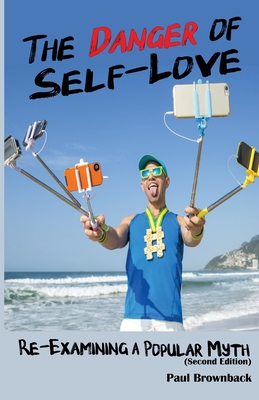
The Danger of Self Love (Second Edition)
Though researchers have discredited the self-esteem movement, it nonetheless remains ingrained in American culture.
At a presentation at Google by noted Stanford psychologist, Carol Dweck, the moderator asked, "I want you to share what we have learned from what is now the widely discredited theory of self-esteem and the self-esteem movement." Dweck responded, "It was a complete disaster.... It led to the acceptance of mediocrity, it didn't challenge people to fulfill their potential, and our research shows that telling people they are smart actually backfires."[i]
Despite such findings, our cultural commitment to self-esteem graphically displayed itself in a recent recruitment video produced by the CIA. John Nolte describes:
The recruitment video features a preening, unnamed narcissist who literally struts around preaching about how awesome she is, how proud she is of herself, not because of her accomplishments, but because of something she has no control over - her identity, her race, gender, her sexuality (cisgender), and even - get this - her "generalized anxiety disorder."[ii]
Apparently, the CIA views self-esteem as the hallmark of a healthy person that would be an asset to the agency.
Self-esteem, and its foundational concept of unconditional love and acceptance, also continue as prominent themes among evangelicals. They teach that God accepts the believer unconditionally and therefore he can and should feel good about himself unconditionally, i.e. apart from performance. Doing so is touted as a formula for spiritual wellness.
This book explains the fallacy of both the secular and evangelical forms of these beliefs, and the danger inherent in embracing them. More important, it offers a biblical alternative that promotes psychological and spiritual health.
.
PRP: 55.49 Lei

Acesta este Prețul Recomandat de Producător. Prețul de vânzare al produsului este afișat mai jos.
49.94Lei
49.94Lei
55.49 LeiPrimești 49 puncte
Livrare in 2-4 saptamani
Descrierea produsului
Though researchers have discredited the self-esteem movement, it nonetheless remains ingrained in American culture.
At a presentation at Google by noted Stanford psychologist, Carol Dweck, the moderator asked, "I want you to share what we have learned from what is now the widely discredited theory of self-esteem and the self-esteem movement." Dweck responded, "It was a complete disaster.... It led to the acceptance of mediocrity, it didn't challenge people to fulfill their potential, and our research shows that telling people they are smart actually backfires."[i]
Despite such findings, our cultural commitment to self-esteem graphically displayed itself in a recent recruitment video produced by the CIA. John Nolte describes:
The recruitment video features a preening, unnamed narcissist who literally struts around preaching about how awesome she is, how proud she is of herself, not because of her accomplishments, but because of something she has no control over - her identity, her race, gender, her sexuality (cisgender), and even - get this - her "generalized anxiety disorder."[ii]
Apparently, the CIA views self-esteem as the hallmark of a healthy person that would be an asset to the agency.
Self-esteem, and its foundational concept of unconditional love and acceptance, also continue as prominent themes among evangelicals. They teach that God accepts the believer unconditionally and therefore he can and should feel good about himself unconditionally, i.e. apart from performance. Doing so is touted as a formula for spiritual wellness.
This book explains the fallacy of both the secular and evangelical forms of these beliefs, and the danger inherent in embracing them. More important, it offers a biblical alternative that promotes psychological and spiritual health.
.
Detaliile produsului



