





Kulliyat-e-Allama Iqbal: All Urdu Poetry of Allama Iqbal
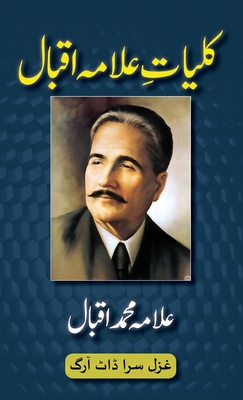
Kulliyat-e-Allama Iqbal: All Urdu Poetry of Allama Iqbal
This collection contains all the four books by Sir Allama Mohammad Iqbal.
Sir Muhammad Iqbal's The Call of the Marching Bell (بانگِ درا, bang-e-dara), his first collection of Urdu poetry, was published in 1924. It was written in three distinct phases of his life. The poems he wrote up to 1905-the year he left for England-reflect patriotism and the imagery of nature, including the Urdu language patriotic "Saare Jahan se Accha", and "Tarana-e-Milli" ("The Song of the Community"). The second set of poems date from 1905 to 1908, when Iqbal studied in Europe, and dwell upon the nature of European society, which he emphasized had lost spiritual and religious values. This inspired Iqbal to write poems on the historical and cultural heritage of Islam and the Muslim community, with a global perspective. Iqbal urges the entire Muslim community, addressed as the Ummah, to define personal, social and political existence by the values and teachings of Islam.Iqbal's works were in Persian for most of his career, but after 1930 his works were mainly in Urdu. His works in this period were often specifically directed at the Muslim masses of India, with an even stronger emphasis on Islam and Muslim spiritual and political reawakening. Published in 1935, Bal-e-Jibril بالِ جبریل (Wings of Gabriel) is considered by many critics as his finest Urdu poetry and was inspired by his visit to Spain, where he visited the monuments and legacy of the kingdom of the Moors. It consists of ghazals, poems, quatrains and epigrams and carries a strong sense of religious passion.Zarb-i-Kalim ضربِ کلیم (or The Rod of Moses) is another philosophical poetry book of Allama Iqbal in Urdu, it was published in 1936, two years before his death. In which he described as his political manifesto. It was published with the subtitle "A Declaration of War Against the Present Times. Muhammad Iqbal argues that modern problems are due to the godlessness, materialism, and injustice of modern civilization, which feeds on the subjugation and exploitation of weak nations, especially the Indian Muslims.Iqbal's final work was Armughan-e-Hijaz ارمغانِ حجاز (The Gift of Hijaz), published posthumously in 1938. The first part contains quatrains in Persian, and the second part contains some poems and e
PRP: 330.58 Lei

Acesta este Prețul Recomandat de Producător. Prețul de vânzare al produsului este afișat mai jos.
264.46Lei
264.46Lei
330.58 LeiPrimești 264 puncte
Livrare in 2-4 saptamani
Descrierea produsului
This collection contains all the four books by Sir Allama Mohammad Iqbal.
Sir Muhammad Iqbal's The Call of the Marching Bell (بانگِ درا, bang-e-dara), his first collection of Urdu poetry, was published in 1924. It was written in three distinct phases of his life. The poems he wrote up to 1905-the year he left for England-reflect patriotism and the imagery of nature, including the Urdu language patriotic "Saare Jahan se Accha", and "Tarana-e-Milli" ("The Song of the Community"). The second set of poems date from 1905 to 1908, when Iqbal studied in Europe, and dwell upon the nature of European society, which he emphasized had lost spiritual and religious values. This inspired Iqbal to write poems on the historical and cultural heritage of Islam and the Muslim community, with a global perspective. Iqbal urges the entire Muslim community, addressed as the Ummah, to define personal, social and political existence by the values and teachings of Islam.Iqbal's works were in Persian for most of his career, but after 1930 his works were mainly in Urdu. His works in this period were often specifically directed at the Muslim masses of India, with an even stronger emphasis on Islam and Muslim spiritual and political reawakening. Published in 1935, Bal-e-Jibril بالِ جبریل (Wings of Gabriel) is considered by many critics as his finest Urdu poetry and was inspired by his visit to Spain, where he visited the monuments and legacy of the kingdom of the Moors. It consists of ghazals, poems, quatrains and epigrams and carries a strong sense of religious passion.Zarb-i-Kalim ضربِ کلیم (or The Rod of Moses) is another philosophical poetry book of Allama Iqbal in Urdu, it was published in 1936, two years before his death. In which he described as his political manifesto. It was published with the subtitle "A Declaration of War Against the Present Times. Muhammad Iqbal argues that modern problems are due to the godlessness, materialism, and injustice of modern civilization, which feeds on the subjugation and exploitation of weak nations, especially the Indian Muslims.Iqbal's final work was Armughan-e-Hijaz ارمغانِ حجاز (The Gift of Hijaz), published posthumously in 1938. The first part contains quatrains in Persian, and the second part contains some poems and e
Detaliile produsului



