





Nature and Walking
Nature and Walking
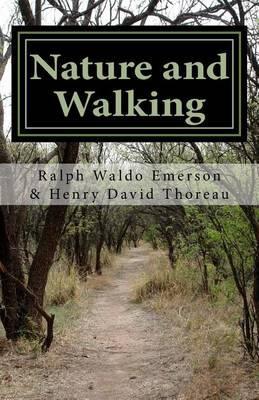
This literature anthology volume contains Ralph Waldo Emerson's Nature and Henry David Thoreau's Walking. The two respective essays are the two most important essays in the environmental movement. Ralph Waldo Emerson was an American essayist, lecturer, and poet who led the Transcendentalist movement of the mid 19th century. He was seen as a champion of individualism and a prescient critic of the countervailing pressures of society, and he disseminated his thoughts through dozens of published essays & correspondence and more than 1,500 public lectures and speeches across the United States. Ralph Waldo Emerson's essays & correspondence and speeches encompasses a number of subjects, never espousing fixed philosophical tenets, but developing certain ideas such as individuality, freedom, the ability of humankind to realize almost anything, and the relationship between the soul and the surrounding world. Ralph Waldo Emerson wrote most of his important essays as lectures and speeches first, then revised them for print. In Ralph Waldo Emerson's essay Nature, Emerson puts forth the foundation of transcendentalism, a belief system that espouses a non-traditional appreciation of nature. Within the essay, Emerson divides nature into four usages; Commodity, Beauty, Language, and Discipline. According to Ralph Waldo Emerson, those four distinctions define the ways by which humans use nature for their basic needs. Emerson followed the success of his Nature essay with a speech called The American Scholar, which together with his previous lectures laid the foundation for transcendentalism and his literary career. Walking by Henry David Thoreau is an essay that was published posthumously in 1862. Walking is considered to be one of Henry David Thoreau's seminal works, so much so that he once wrote of the lecture, "I regard this as a sort of introduction to all that I may write hereafter." While Henry David Thoreau was considered a transcendentalist, his work of writings encompasses social sciences, political science, civil rights, and humanities. Nature and Walking are both often required textbook reading and the two influential essays are conveniently combined in this one volume.
PRP: 53.86 Lei

Acesta este Prețul Recomandat de Producător. Prețul de vânzare al produsului este afișat mai jos.
43.09Lei
43.09Lei
53.86 LeiPrimești 43 puncte
Indisponibil
Descrierea produsului
This literature anthology volume contains Ralph Waldo Emerson's Nature and Henry David Thoreau's Walking. The two respective essays are the two most important essays in the environmental movement. Ralph Waldo Emerson was an American essayist, lecturer, and poet who led the Transcendentalist movement of the mid 19th century. He was seen as a champion of individualism and a prescient critic of the countervailing pressures of society, and he disseminated his thoughts through dozens of published essays & correspondence and more than 1,500 public lectures and speeches across the United States. Ralph Waldo Emerson's essays & correspondence and speeches encompasses a number of subjects, never espousing fixed philosophical tenets, but developing certain ideas such as individuality, freedom, the ability of humankind to realize almost anything, and the relationship between the soul and the surrounding world. Ralph Waldo Emerson wrote most of his important essays as lectures and speeches first, then revised them for print. In Ralph Waldo Emerson's essay Nature, Emerson puts forth the foundation of transcendentalism, a belief system that espouses a non-traditional appreciation of nature. Within the essay, Emerson divides nature into four usages; Commodity, Beauty, Language, and Discipline. According to Ralph Waldo Emerson, those four distinctions define the ways by which humans use nature for their basic needs. Emerson followed the success of his Nature essay with a speech called The American Scholar, which together with his previous lectures laid the foundation for transcendentalism and his literary career. Walking by Henry David Thoreau is an essay that was published posthumously in 1862. Walking is considered to be one of Henry David Thoreau's seminal works, so much so that he once wrote of the lecture, "I regard this as a sort of introduction to all that I may write hereafter." While Henry David Thoreau was considered a transcendentalist, his work of writings encompasses social sciences, political science, civil rights, and humanities. Nature and Walking are both often required textbook reading and the two influential essays are conveniently combined in this one volume.
Detaliile produsului



