





The Child of the Cavern: A New Translation in Modern Accessible English
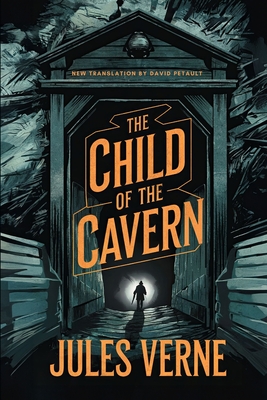
The Child of the Cavern: A New Translation in Modern Accessible English
Jules Verne published The Child of the Cavern (Les Indes noires) in 1877, during a period when industrial progress had begun to reveal its costs as clearly as its triumphs. The novel descends into the exhausted coal mines of Aberfoyle, Scotland, where the era of extraction appears finished. Yet Simon Ford, the mine's former overseer, suspects otherwise-that deeper seams of coal lie waiting beneath layers of abandoned tunnels and forgotten shafts. When Ford's son Harry and the engineer James Starr venture into these subterranean depths, they find more than mineral deposits. Strange phenomena disturb the darkness: inexplicable sounds, mysterious sabotage, evidence of unseen presence. Then they discover Nell, a young woman who has lived her entire existence in this lightless world, knowing nothing of sun or sky or the surface civilization that hollowed out the earth beneath its feet. Verne uses the descent into Aberfoyle as both literal journey and symbolic investigation. The novel asks uncomfortable questions about what industrial society leaves in its wake-not just depleted resources but abandoned spaces, forgotten people, entire ecosystems that exist beyond the light of common knowledge. Nell becomes the embodiment of this hidden world, a person shaped entirely by absence: absence of light, of family history, of connection to the world above. What distinguishes The Child of the Cavern within Verne's work is its claustrophobic intimacy. Where novels like Journey to the Center of the Earth use subterranean settings to imagine prehistoric wonders, this one confronts something more immediate and unsettling-the consequences of extraction, the persistence of life in depleted places, the question of what humanity owes to the depths it has emptied. Verne's descriptions of the mine carry geological precision, but his real interest lies in how people adapt to environments that seem to preclude human flourishing. The Fords and their community have made a home in the darkness, creating society from scarcity. Their determination to revive Aberfoyle becomes a question about resilience itself: whether hope represents human nobility or human stubbornness, and whether the distinction matters when survival hangs in the balance. This edition preserves Verne's atmospheric tension while making the text accessible to contemporary readers. For those interested in how nineteenth-century literature grappled with industrialization's darker implications, The Child of the Cavern offe
PRP: 84.40 Lei

Acesta este Prețul Recomandat de Producător. Prețul de vânzare al produsului este afișat mai jos.
75.96Lei
75.96Lei
84.40 LeiPrimești 75 puncte
Livrare in 2-4 saptamani
Descrierea produsului
Jules Verne published The Child of the Cavern (Les Indes noires) in 1877, during a period when industrial progress had begun to reveal its costs as clearly as its triumphs. The novel descends into the exhausted coal mines of Aberfoyle, Scotland, where the era of extraction appears finished. Yet Simon Ford, the mine's former overseer, suspects otherwise-that deeper seams of coal lie waiting beneath layers of abandoned tunnels and forgotten shafts. When Ford's son Harry and the engineer James Starr venture into these subterranean depths, they find more than mineral deposits. Strange phenomena disturb the darkness: inexplicable sounds, mysterious sabotage, evidence of unseen presence. Then they discover Nell, a young woman who has lived her entire existence in this lightless world, knowing nothing of sun or sky or the surface civilization that hollowed out the earth beneath its feet. Verne uses the descent into Aberfoyle as both literal journey and symbolic investigation. The novel asks uncomfortable questions about what industrial society leaves in its wake-not just depleted resources but abandoned spaces, forgotten people, entire ecosystems that exist beyond the light of common knowledge. Nell becomes the embodiment of this hidden world, a person shaped entirely by absence: absence of light, of family history, of connection to the world above. What distinguishes The Child of the Cavern within Verne's work is its claustrophobic intimacy. Where novels like Journey to the Center of the Earth use subterranean settings to imagine prehistoric wonders, this one confronts something more immediate and unsettling-the consequences of extraction, the persistence of life in depleted places, the question of what humanity owes to the depths it has emptied. Verne's descriptions of the mine carry geological precision, but his real interest lies in how people adapt to environments that seem to preclude human flourishing. The Fords and their community have made a home in the darkness, creating society from scarcity. Their determination to revive Aberfoyle becomes a question about resilience itself: whether hope represents human nobility or human stubbornness, and whether the distinction matters when survival hangs in the balance. This edition preserves Verne's atmospheric tension while making the text accessible to contemporary readers. For those interested in how nineteenth-century literature grappled with industrialization's darker implications, The Child of the Cavern offe
Detaliile produsului



