





Ragnarok: The Origins and History of the Apocalypse in Norse Mythology
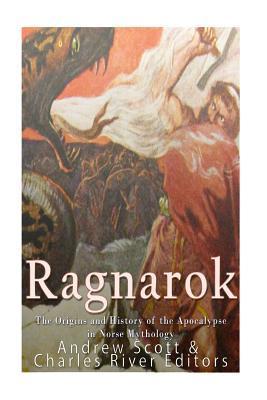
Ragnarok: The Origins and History of the Apocalypse in Norse Mythology
*Includes pictures
*Includes medieval accounts
*Includes online resources and a bibliography for further reading
"Brothers shall fight - and fell each other, And sisters' sons - shall kinship stain; Hard is it on earth, - with mighty whoredom; Axe-time, sword-time, - shields are sundered, Wind-time, wolf-time, - ere the world falls; Nor ever shall men - each other spare."
One of the most fascinating elements of Norse cosmology is the fact that its end is foretold in crushing detail. This end of times will come about in a mighty battle called "Ragnarök", an event translated as either "the Fate of the Gods" or (in Richard Wagner's re-imagining) "the Twilight of the Gods." Moreover, not only is the event foretold, but the characters of this drama seem to know of its coming. This is in line with the Germanic faith in the concept of "fate." For the German pagans, fate or destiny was an integral part of human existence; while people may not know them ahead of time, their stories are written before they are born, and this was true of the gods as well. Although the gods seem to accept their fates, this concept was not the same as that of "destiny" in Christianity (especially Calvinist pre-destination), because the Norse believed that fate could perhaps be warped and shifted.
According to historian Rudolph Simek, Ragnarök, the "Final Destiny of the Gods," was comprised of four principal cataclysmic events: the Fimbulwinter, a mighty winter that lasted three years; Surtr's "world fire" that consumed everything; the sinking of the earth beneath the waves whipped up by the "Midgard Serpent;" and the darkening/disappearance of the sun after Fenris-Wolf devoured it. Afterwards, there is also a resurrection of humanity and the gods that is often forgotten but gives a fascinating insight into the socio-political mindset of the Norse storytellers.
The actual description of Ragnarök appears best in the medieval prose text, the Gylfaginning, and the prophetic poem the Völuspá, but Ragnarök's antecedents are equally fascinating and present a catalog of crimes and errors that led to the fated "twilight" of the gods. This idea of "destiny," of fate, is key to understanding the culture behind these strange tales.
Many of the allusions to characters, objects, and events in the sources available today are still mysterious to historians. Much has been lost to the abyss of time, but, although these references and connections often bemuse people, th
*Includes medieval accounts
*Includes online resources and a bibliography for further reading
"Brothers shall fight - and fell each other, And sisters' sons - shall kinship stain; Hard is it on earth, - with mighty whoredom; Axe-time, sword-time, - shields are sundered, Wind-time, wolf-time, - ere the world falls; Nor ever shall men - each other spare."
One of the most fascinating elements of Norse cosmology is the fact that its end is foretold in crushing detail. This end of times will come about in a mighty battle called "Ragnarök", an event translated as either "the Fate of the Gods" or (in Richard Wagner's re-imagining) "the Twilight of the Gods." Moreover, not only is the event foretold, but the characters of this drama seem to know of its coming. This is in line with the Germanic faith in the concept of "fate." For the German pagans, fate or destiny was an integral part of human existence; while people may not know them ahead of time, their stories are written before they are born, and this was true of the gods as well. Although the gods seem to accept their fates, this concept was not the same as that of "destiny" in Christianity (especially Calvinist pre-destination), because the Norse believed that fate could perhaps be warped and shifted.
According to historian Rudolph Simek, Ragnarök, the "Final Destiny of the Gods," was comprised of four principal cataclysmic events: the Fimbulwinter, a mighty winter that lasted three years; Surtr's "world fire" that consumed everything; the sinking of the earth beneath the waves whipped up by the "Midgard Serpent;" and the darkening/disappearance of the sun after Fenris-Wolf devoured it. Afterwards, there is also a resurrection of humanity and the gods that is often forgotten but gives a fascinating insight into the socio-political mindset of the Norse storytellers.
The actual description of Ragnarök appears best in the medieval prose text, the Gylfaginning, and the prophetic poem the Völuspá, but Ragnarök's antecedents are equally fascinating and present a catalog of crimes and errors that led to the fated "twilight" of the gods. This idea of "destiny," of fate, is key to understanding the culture behind these strange tales.
Many of the allusions to characters, objects, and events in the sources available today are still mysterious to historians. Much has been lost to the abyss of time, but, although these references and connections often bemuse people, th
PRP: 79.36 Lei

Acesta este Prețul Recomandat de Producător. Prețul de vânzare al produsului este afișat mai jos.
63.49Lei
63.49Lei
79.36 LeiPrimești 63 puncte
Livrare in 2-4 saptamani
Descrierea produsului
*Includes pictures
*Includes medieval accounts
*Includes online resources and a bibliography for further reading
"Brothers shall fight - and fell each other, And sisters' sons - shall kinship stain; Hard is it on earth, - with mighty whoredom; Axe-time, sword-time, - shields are sundered, Wind-time, wolf-time, - ere the world falls; Nor ever shall men - each other spare."
One of the most fascinating elements of Norse cosmology is the fact that its end is foretold in crushing detail. This end of times will come about in a mighty battle called "Ragnarök", an event translated as either "the Fate of the Gods" or (in Richard Wagner's re-imagining) "the Twilight of the Gods." Moreover, not only is the event foretold, but the characters of this drama seem to know of its coming. This is in line with the Germanic faith in the concept of "fate." For the German pagans, fate or destiny was an integral part of human existence; while people may not know them ahead of time, their stories are written before they are born, and this was true of the gods as well. Although the gods seem to accept their fates, this concept was not the same as that of "destiny" in Christianity (especially Calvinist pre-destination), because the Norse believed that fate could perhaps be warped and shifted.
According to historian Rudolph Simek, Ragnarök, the "Final Destiny of the Gods," was comprised of four principal cataclysmic events: the Fimbulwinter, a mighty winter that lasted three years; Surtr's "world fire" that consumed everything; the sinking of the earth beneath the waves whipped up by the "Midgard Serpent;" and the darkening/disappearance of the sun after Fenris-Wolf devoured it. Afterwards, there is also a resurrection of humanity and the gods that is often forgotten but gives a fascinating insight into the socio-political mindset of the Norse storytellers.
The actual description of Ragnarök appears best in the medieval prose text, the Gylfaginning, and the prophetic poem the Völuspá, but Ragnarök's antecedents are equally fascinating and present a catalog of crimes and errors that led to the fated "twilight" of the gods. This idea of "destiny," of fate, is key to understanding the culture behind these strange tales.
Many of the allusions to characters, objects, and events in the sources available today are still mysterious to historians. Much has been lost to the abyss of time, but, although these references and connections often bemuse people, th
*Includes medieval accounts
*Includes online resources and a bibliography for further reading
"Brothers shall fight - and fell each other, And sisters' sons - shall kinship stain; Hard is it on earth, - with mighty whoredom; Axe-time, sword-time, - shields are sundered, Wind-time, wolf-time, - ere the world falls; Nor ever shall men - each other spare."
One of the most fascinating elements of Norse cosmology is the fact that its end is foretold in crushing detail. This end of times will come about in a mighty battle called "Ragnarök", an event translated as either "the Fate of the Gods" or (in Richard Wagner's re-imagining) "the Twilight of the Gods." Moreover, not only is the event foretold, but the characters of this drama seem to know of its coming. This is in line with the Germanic faith in the concept of "fate." For the German pagans, fate or destiny was an integral part of human existence; while people may not know them ahead of time, their stories are written before they are born, and this was true of the gods as well. Although the gods seem to accept their fates, this concept was not the same as that of "destiny" in Christianity (especially Calvinist pre-destination), because the Norse believed that fate could perhaps be warped and shifted.
According to historian Rudolph Simek, Ragnarök, the "Final Destiny of the Gods," was comprised of four principal cataclysmic events: the Fimbulwinter, a mighty winter that lasted three years; Surtr's "world fire" that consumed everything; the sinking of the earth beneath the waves whipped up by the "Midgard Serpent;" and the darkening/disappearance of the sun after Fenris-Wolf devoured it. Afterwards, there is also a resurrection of humanity and the gods that is often forgotten but gives a fascinating insight into the socio-political mindset of the Norse storytellers.
The actual description of Ragnarök appears best in the medieval prose text, the Gylfaginning, and the prophetic poem the Völuspá, but Ragnarök's antecedents are equally fascinating and present a catalog of crimes and errors that led to the fated "twilight" of the gods. This idea of "destiny," of fate, is key to understanding the culture behind these strange tales.
Many of the allusions to characters, objects, and events in the sources available today are still mysterious to historians. Much has been lost to the abyss of time, but, although these references and connections often bemuse people, th
Detaliile produsului



