





Native American Tribes: The History and Culture of the Mound Builders
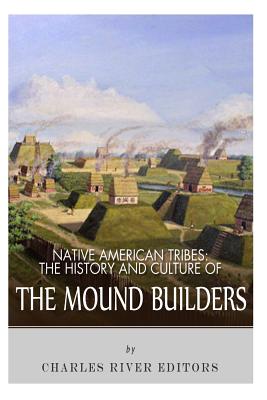
Native American Tribes: The History and Culture of the Mound Builders
*Includes pictures of mounds and other artifacts created by the Mound Builders.
*Explains the origins of the Mound Builders, and how their culture influenced today's Native American tribes.
*Discusses the mysteries of the Mound Builders and theories about them.
*Includes a Bibliography for further reading.
"There being one of these [mounds] in my neighborhood, I wished to satisfy myself whether any, and which of these opinions [regarding the identity of the Mound Builders] were just. For this purpose I determined to open and examine it thoroughly." - Thomas Jefferson
When Europeans first came upon the giant mounds and earthworks dotting the North American landscape in the 18th century, they couldn't imagine that the Native Americans they came into contact with were capable of such advanced technology and masterful engineering. In fact, when President George Washington sent adventurer and military strategist Rufus Putnam to survey the land at the convergence of the Ohio and Muskingum Rivers in southeastern Ohio for settlement, Putnam reported that he'd discovered an impressive walled earthwork complex near present-day Marietta that was obviously the breastwork of an ancient fortress built by some long-forgotten ancient civilization. Like others of his time, Putnam couldn't conceive that indigenous Americans had at one time reached such an advanced level of cultural and technical sophistication.
As detailed by Thomas Jefferson in his 1783 book, Notes on the State of Virginia, about 1780 the future American President began to excavate a mound near Montecello, his Virginia estate. He noted, "I determined to open and examine it thoroughly. It was situated on the low grounds of the Rivanna [River], about two miles above its principal fork, and opposite to some hills, on which had been an Indian town. It was of a spheroidical form, of about 40 feet diameter at the base." Jefferson discovered stratified human remains and ultimately concluded that this particular mound was an ancient Indian burial place. Credited with what was perhaps the first systematic archaeological excavation in North America, Jefferson came to the realization that different mounds might serve different uses, which has since been proven correct.
However, even as these elaborate earthen complexes have ultimately yielded tens of thousands of artifacts, including earspools, panpipes, effigy figurines, engraved copper gorgets, head plates and headdresses, bone h
PRP: 63.86 Lei

Acesta este Prețul Recomandat de Producător. Prețul de vânzare al produsului este afișat mai jos.
57.47Lei
57.47Lei
63.86 LeiPrimești 57 puncte
Livrare in 2-4 saptamani
Descrierea produsului
*Includes pictures of mounds and other artifacts created by the Mound Builders.
*Explains the origins of the Mound Builders, and how their culture influenced today's Native American tribes.
*Discusses the mysteries of the Mound Builders and theories about them.
*Includes a Bibliography for further reading.
"There being one of these [mounds] in my neighborhood, I wished to satisfy myself whether any, and which of these opinions [regarding the identity of the Mound Builders] were just. For this purpose I determined to open and examine it thoroughly." - Thomas Jefferson
When Europeans first came upon the giant mounds and earthworks dotting the North American landscape in the 18th century, they couldn't imagine that the Native Americans they came into contact with were capable of such advanced technology and masterful engineering. In fact, when President George Washington sent adventurer and military strategist Rufus Putnam to survey the land at the convergence of the Ohio and Muskingum Rivers in southeastern Ohio for settlement, Putnam reported that he'd discovered an impressive walled earthwork complex near present-day Marietta that was obviously the breastwork of an ancient fortress built by some long-forgotten ancient civilization. Like others of his time, Putnam couldn't conceive that indigenous Americans had at one time reached such an advanced level of cultural and technical sophistication.
As detailed by Thomas Jefferson in his 1783 book, Notes on the State of Virginia, about 1780 the future American President began to excavate a mound near Montecello, his Virginia estate. He noted, "I determined to open and examine it thoroughly. It was situated on the low grounds of the Rivanna [River], about two miles above its principal fork, and opposite to some hills, on which had been an Indian town. It was of a spheroidical form, of about 40 feet diameter at the base." Jefferson discovered stratified human remains and ultimately concluded that this particular mound was an ancient Indian burial place. Credited with what was perhaps the first systematic archaeological excavation in North America, Jefferson came to the realization that different mounds might serve different uses, which has since been proven correct.
However, even as these elaborate earthen complexes have ultimately yielded tens of thousands of artifacts, including earspools, panpipes, effigy figurines, engraved copper gorgets, head plates and headdresses, bone h
Detaliile produsului



