





The Far Canyon
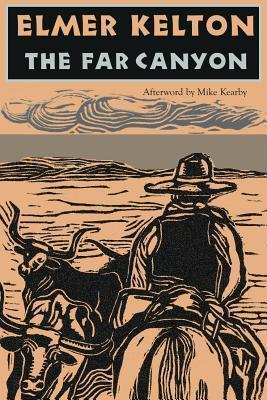
The Far Canyon
Elmer Kelton has driven the western genre into new territory, and The Far Canyon continues the saga of two of his most memorable characters. Both Confederate veteran, Jeff Layne, and the Comanche warrior, Crow Feather, return to face bitter challenges to their freedom and ideals. For both men, a remote canyon becomes the place they choose to make a final stand.
The Far Canyon, the sequel to Slaughter was published in 1994 and won Elmer Kelton his sixth esteemed Spur Award from the Western Writers of America. By 2002 Kelton had not only earned his seventh Spur Award with Way of the Coyote, but had also won three Western Heritage Awards. The National Cowboy and Western Heritage Museum honored Kelton for The Time it Never Rained in 1974, The Good Old Boys in 1979, and The Man Who Rode Midnight in 1988. With such accomplishments, it is easy to understand why, in 1995, the Western Writers of America voted Elmer Kelton the greatest western writer of all time. In The Far Canyon, Kelton masterfully unveils for his reader the finality of the buffalo's demise, the beginning of a time when cattle would replace the American bison on the southern plains and ultimately end the Plains Indian culture. The novel reveals the history of the period, not in a general grand swoop of the pen, but rather, up close and personal, so his readership can judge the impact of the period upon his characters. The novel's first chapter introduces Comanche warrior Crow Feather, whose situation is emblematic of a common recurring theme in all of Kelton's works . . . change. Protagonist Jeff Layne is faced with the very same dramatic problem, the devastating threat to one's self-concept inherent in change. Layne, the hide hunter from Slaughter is weary of killing and death. He decides to return to South Texas, determined to earn his living with the newest resource on the plains, cattle. And the cultures collide. Kelton eloquently reveals the impact of hide hunters on Plains Indian culture. Crow Feather realizes that no matter how many whites the Comanche kill, there will always be more "coming back." Crow Feather also understands that his life and the lives of his wives and children will never be easy again. Are Layne and Crow Feather of a character that will allow them to escape a predetermined fate by reaching that far canyon, or will they simply perish under the cultural dictate of their historical time?
The question
The Far Canyon, the sequel to Slaughter was published in 1994 and won Elmer Kelton his sixth esteemed Spur Award from the Western Writers of America. By 2002 Kelton had not only earned his seventh Spur Award with Way of the Coyote, but had also won three Western Heritage Awards. The National Cowboy and Western Heritage Museum honored Kelton for The Time it Never Rained in 1974, The Good Old Boys in 1979, and The Man Who Rode Midnight in 1988. With such accomplishments, it is easy to understand why, in 1995, the Western Writers of America voted Elmer Kelton the greatest western writer of all time. In The Far Canyon, Kelton masterfully unveils for his reader the finality of the buffalo's demise, the beginning of a time when cattle would replace the American bison on the southern plains and ultimately end the Plains Indian culture. The novel reveals the history of the period, not in a general grand swoop of the pen, but rather, up close and personal, so his readership can judge the impact of the period upon his characters. The novel's first chapter introduces Comanche warrior Crow Feather, whose situation is emblematic of a common recurring theme in all of Kelton's works . . . change. Protagonist Jeff Layne is faced with the very same dramatic problem, the devastating threat to one's self-concept inherent in change. Layne, the hide hunter from Slaughter is weary of killing and death. He decides to return to South Texas, determined to earn his living with the newest resource on the plains, cattle. And the cultures collide. Kelton eloquently reveals the impact of hide hunters on Plains Indian culture. Crow Feather realizes that no matter how many whites the Comanche kill, there will always be more "coming back." Crow Feather also understands that his life and the lives of his wives and children will never be easy again. Are Layne and Crow Feather of a character that will allow them to escape a predetermined fate by reaching that far canyon, or will they simply perish under the cultural dictate of their historical time?
The question
PRP: 117.49 Lei

Acesta este Prețul Recomandat de Producător. Prețul de vânzare al produsului este afișat mai jos.
93.99Lei
93.99Lei
117.49 LeiPrimești 93 puncte
Indisponibil
Descrierea produsului
Elmer Kelton has driven the western genre into new territory, and The Far Canyon continues the saga of two of his most memorable characters. Both Confederate veteran, Jeff Layne, and the Comanche warrior, Crow Feather, return to face bitter challenges to their freedom and ideals. For both men, a remote canyon becomes the place they choose to make a final stand.
The Far Canyon, the sequel to Slaughter was published in 1994 and won Elmer Kelton his sixth esteemed Spur Award from the Western Writers of America. By 2002 Kelton had not only earned his seventh Spur Award with Way of the Coyote, but had also won three Western Heritage Awards. The National Cowboy and Western Heritage Museum honored Kelton for The Time it Never Rained in 1974, The Good Old Boys in 1979, and The Man Who Rode Midnight in 1988. With such accomplishments, it is easy to understand why, in 1995, the Western Writers of America voted Elmer Kelton the greatest western writer of all time. In The Far Canyon, Kelton masterfully unveils for his reader the finality of the buffalo's demise, the beginning of a time when cattle would replace the American bison on the southern plains and ultimately end the Plains Indian culture. The novel reveals the history of the period, not in a general grand swoop of the pen, but rather, up close and personal, so his readership can judge the impact of the period upon his characters. The novel's first chapter introduces Comanche warrior Crow Feather, whose situation is emblematic of a common recurring theme in all of Kelton's works . . . change. Protagonist Jeff Layne is faced with the very same dramatic problem, the devastating threat to one's self-concept inherent in change. Layne, the hide hunter from Slaughter is weary of killing and death. He decides to return to South Texas, determined to earn his living with the newest resource on the plains, cattle. And the cultures collide. Kelton eloquently reveals the impact of hide hunters on Plains Indian culture. Crow Feather realizes that no matter how many whites the Comanche kill, there will always be more "coming back." Crow Feather also understands that his life and the lives of his wives and children will never be easy again. Are Layne and Crow Feather of a character that will allow them to escape a predetermined fate by reaching that far canyon, or will they simply perish under the cultural dictate of their historical time?
The question
The Far Canyon, the sequel to Slaughter was published in 1994 and won Elmer Kelton his sixth esteemed Spur Award from the Western Writers of America. By 2002 Kelton had not only earned his seventh Spur Award with Way of the Coyote, but had also won three Western Heritage Awards. The National Cowboy and Western Heritage Museum honored Kelton for The Time it Never Rained in 1974, The Good Old Boys in 1979, and The Man Who Rode Midnight in 1988. With such accomplishments, it is easy to understand why, in 1995, the Western Writers of America voted Elmer Kelton the greatest western writer of all time. In The Far Canyon, Kelton masterfully unveils for his reader the finality of the buffalo's demise, the beginning of a time when cattle would replace the American bison on the southern plains and ultimately end the Plains Indian culture. The novel reveals the history of the period, not in a general grand swoop of the pen, but rather, up close and personal, so his readership can judge the impact of the period upon his characters. The novel's first chapter introduces Comanche warrior Crow Feather, whose situation is emblematic of a common recurring theme in all of Kelton's works . . . change. Protagonist Jeff Layne is faced with the very same dramatic problem, the devastating threat to one's self-concept inherent in change. Layne, the hide hunter from Slaughter is weary of killing and death. He decides to return to South Texas, determined to earn his living with the newest resource on the plains, cattle. And the cultures collide. Kelton eloquently reveals the impact of hide hunters on Plains Indian culture. Crow Feather realizes that no matter how many whites the Comanche kill, there will always be more "coming back." Crow Feather also understands that his life and the lives of his wives and children will never be easy again. Are Layne and Crow Feather of a character that will allow them to escape a predetermined fate by reaching that far canyon, or will they simply perish under the cultural dictate of their historical time?
The question
Detaliile produsului



